
Luke's Key Witness: A Positive Review
My thesis concerning the Joanna ossuary was the subject of a lengthy news article in a recent publication of the Institute for Biblical Archaeology and the Near East Archaeological Society.

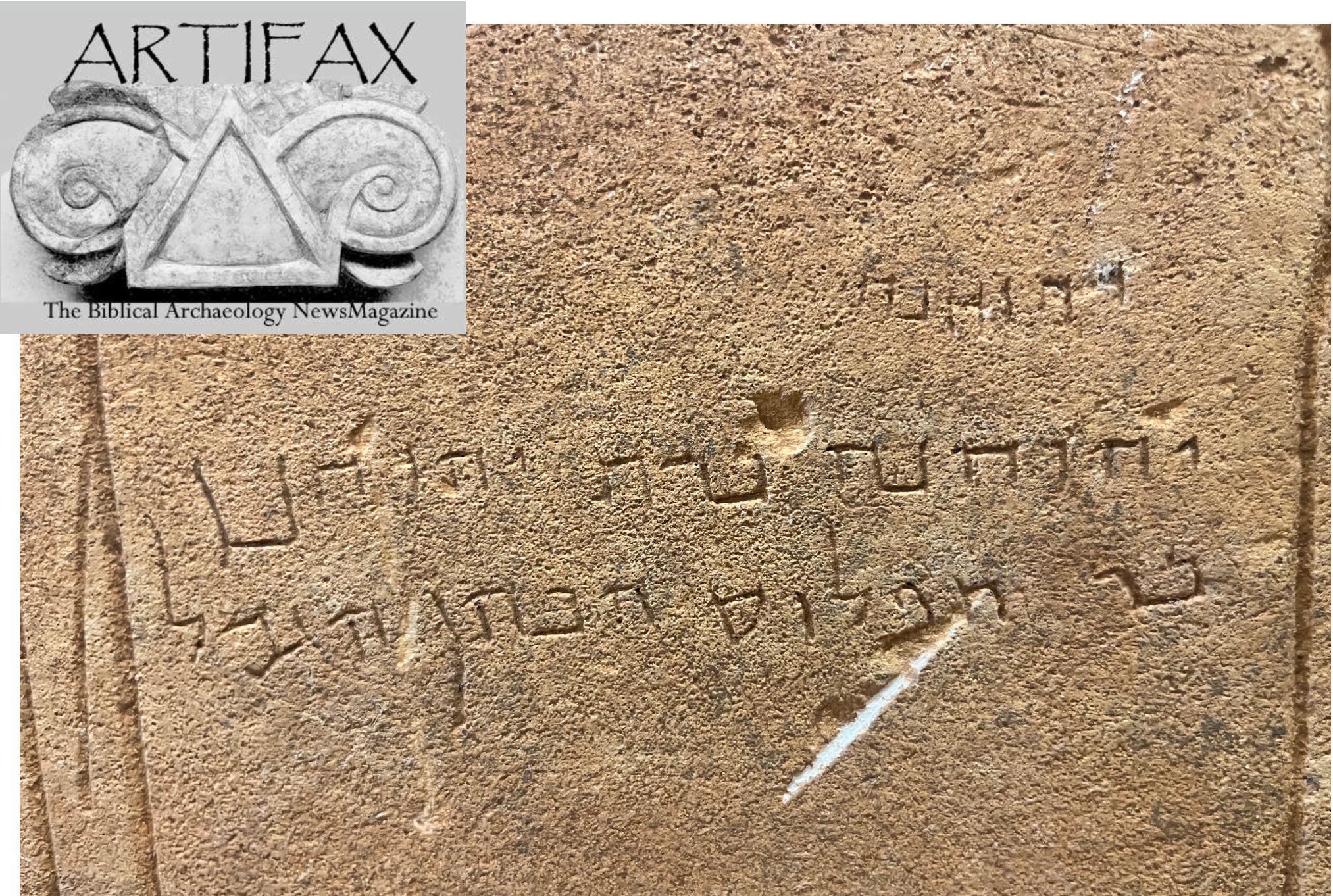
The most recent edition of Artifax: The Biblical Archaeology News Magazine (Spring, 2026, Vol 42, No. 2) included a lengthy discussion of my proposal related to the Joanna ossuary. This 3-page article was written by Clyde Billington who formerly served president of the Near East Archaeological Society (the current president is Scott Stripling). Billington was also one of the founders of the Institute for Biblical Archaeology, and Artifax is a joint publication of both institutions. Below are some of the highlights, or you can scroll to the bottom to download a PDF of the entire article.
JOANNA AND THEOPHILUS INSCRIBED ON AN OSSUARY
The names Joanna and Theophilus, which both appear in the New Testament Gospel of Luke, are also inscribed on an ossuary (limestone burial box for human bones) which was offered for sale in 1983 on the antiquities market in Jerusalem. It was eventually acquired by the Israel’s Department of Antiquities and Museums in 1984 and is now on display at the University of Haifa’s Hecht Museum of Archaeology and Art…
In Luke 8:3, Joanna is called the wife of Chuza, the Prime Minister or steward (Greek: epitropos) of King Herod Antipas. In other words, Chuza was next in authority to the king and in charge of all of the day-to-day governmental affairs in Antipas’s kingdom…The High Priest Theophilus was the son of the Annas and the brother-in-law of the former High Priest Caiaphas, before whom Jesus was taken for an ad hoc trial at the time of His crucifixion.
Shane Rosenthal, a Jewish convert to Christianity, has been investigating this ossuary in his podcast, The Humble Skeptic. In his August 24, 2025, podcast, and also in his forthcoming book Luke’s Key Witness, Rosenthal argues that the Theophilus named on the ossuary was the High Priest Theophilus, and he also argues that it was to him that Luke wrote both his Gospel and the Book of Acts.
Rosenthal also argues that Joanna, named on this ossuary as the grand- daughter of Theophilus, is identical to the Joanna of Luke’s Gospel, who wit- nessed the crucifixion and resurrection of Jesus [his YouTube report is accessibible here].
EDITOR’S NOTE: Theophilus, to whom Luke wrote his Gospel, was unquestionably a powerful Jewish official. In Luke 1:3, Luke addresses Theophilus in Greek as kratiste, which is the vocative of the adjective kratistos which is derived from the noun kratos. The Greek word kratos is found in the English word demo-kracy, and it translates as “strength, might, power, rule.” The adjective kratiste assumes that Theophilus was someone who held an office of great authority.
In other words, I agree with Rosenthal that Luke dedicated his Gospel to the High Priest Theophilus. I also agree with Rosenthal and others that Luke was a Jew and not a Gentile…It seems likely to me that Luke wrote his Gospel to Theophilus while he was the High Priest (37-41 AD), and thus Luke addressed him as kratiste…In the Book of Acts, written later, Luke does not address Theophilus as kratiste, which suggests that Theophilus was then no longer the High Priest (removed by Herod Agrippa I in 41 AD). It appears that the former, and then elderly, High Priest Theophilus, had asked Luke for a report on the spread of Christianity, and it was for him that Luke wrote the Book of Acts.
DOWNLOAD A PDF OF THE FULL ARTICLE HERE
— used by permission —

If you would like to receive a pre-release PDF of my forthcoming book, Luke’s Key Witness, we’ll send you a copy for a GIFT of any size, or when you upgrade to a PAID subscription. Thanks for your support!
