
Things Completely Fulfilled Among Us
Exploring the implications of Luke's opening verse.

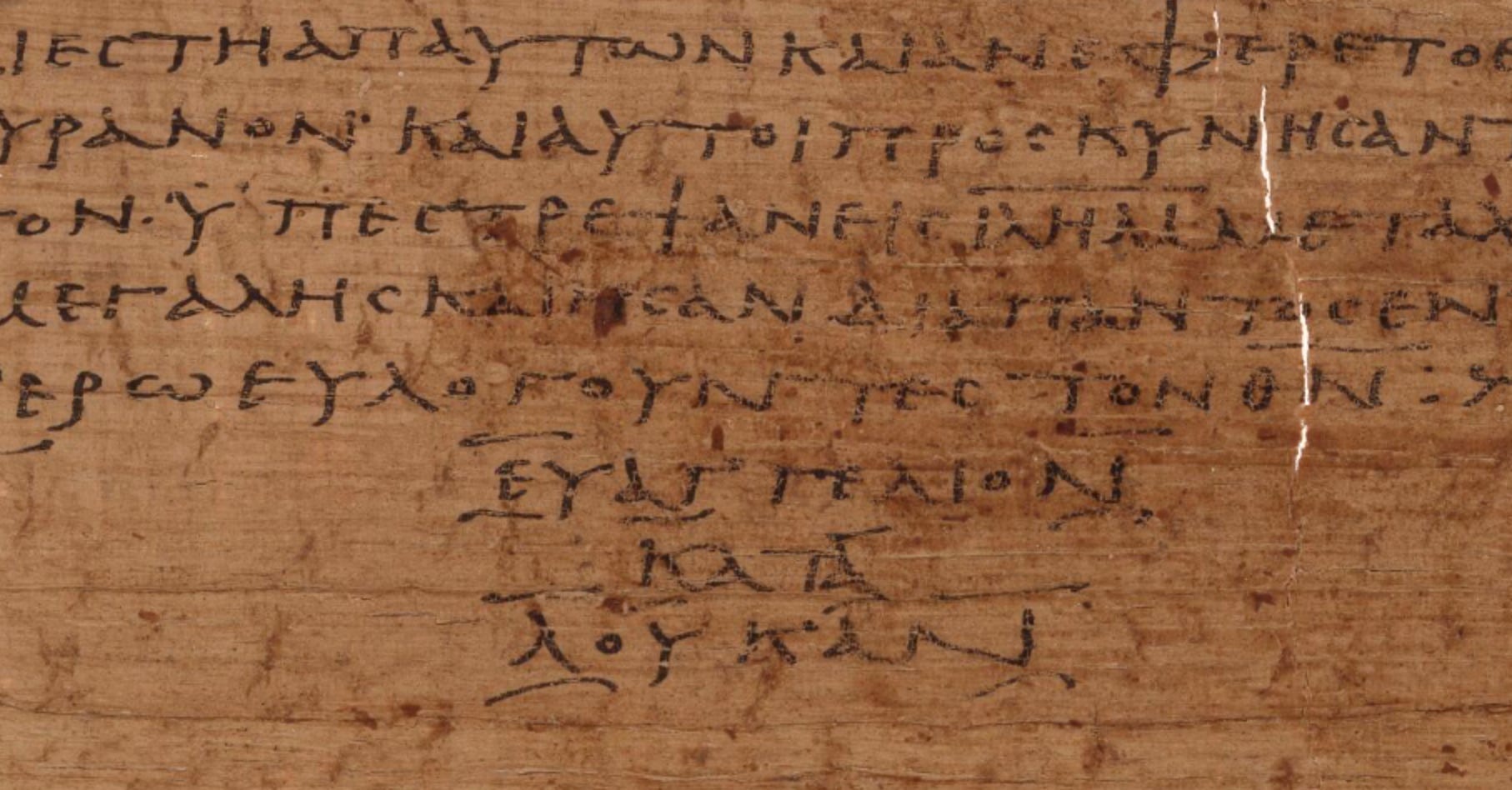
According to the ESV, in the opening verse of his Gospel, Luke refers to the “things that have been accomplished (πληροφορέω) among us.” However, after my own careful investigation of the Greek text of the prologue, I concluded that Luke didn’t merely refer to events that had transpired, but also to promises that were fulfilled. In fact, I suggest that a better way to translate πληροφορέω (plerophoreo) in the latter part of verse 1 is to say that Luke wrote to Theophilus about the “things that were completely fulfilled among us.”
According to one Greek lexicon,1 the two definitions of πληροφορέω are as follows:
1. to fill (completely), fulfill
2. to convince fully
Paul used the word in the first sense when he told Timothy to “fulfill” his ministry (2Tim 4:5), and in the second sense when he encouraged believers to be “fully convinced” (cf. Rom 4:21, 14:5, Col 4:13). This word was also was frequently used in the ancient world to indicate that a bill was “paid in full.”2 Thus, if a man owed someone a denarius, when the amount was eventually paid off, this this would mean his promise was “completely fulfilled.”
This example fits well with Luke’s usage, since the word he uses seems to fit with the promise/fulfillment motif that we find throughout the New Testament generally, and in various places in Luke/Acts more specifically. In fact, when we take a close look at the places in which Luke presents this motif, it appears that he typically has the events of Jesus’ death, burial, and resurrection in view:3
Luke 22:37 For I tell you that this Scripture must be fulfilled in me: ‘And he was numbered with the transgressors.’ For what is written about me has its fulfillment” (citing the concluding verse of the suffering servant prophecy from Isaiah 52 and 53).
Luke 24:44-46 Then he said to them, “These are my words that I spoke to you while I was still with you, that everything written about me in the Law of Moses and the Prophets and the Psalms must be fulfilled…Thus it is written, that the Christ should suffer and on the third day rise from the dead…”
Acts 3:18 But what God foretold by the mouth of all the prophets, that his Christ would suffer, he thus fulfilled.
Acts 13:27 For those who live in Jerusalem and their rulers, because they did not recognize him nor understand the utterances of the prophets, which are read every Sabbath, fulfilled them by condemning him.
Acts 13:32-33 And we bring you the good news that what God promised to the fathers, this he has fulfilled to us their children by raising Jesus…
Since Luke goes on to say that the things Jesus “completely fulfilled among us” had been seen by so many “eyewitnesses,” it’s worth pointing out how this ends up mirroring the structure of the earliest Christian creed cited by Paul in 1st Corinthians 15.4 In this creed that is dated by Bart Ehrman and other liberal New Testament scholars to the time before Paul’s conversion5 (i.e., in the early 30s), Paul declares that the gospel he “delivered” to the Corinthians, centered on Christ’s death, burial and resurrection, as seen by many “witnesses,” and which was “according in the Scriptures.”

One of the things I like to point out about the early creed cited by Paul is that he calls it both “the gospel” (1Cor 15:1) and “the thing of first importance” (1Cor 15:3). Though many believers in our day think of the gospel in terms of their own personal experience, Paul makes clear that the good news he reports is tied to historic events related to Jesus’ death, burial, and resurrection (1Cor 15:4-5). But what I think even more people miss is the fact that Paul’s gospel was not a mere claim, since it was attested by so many living witnesses (1Cor 15:5-8) who confirmed that they saw the messianic promises fulfilled (1Cor 15:3-4). In other words, this attestation is a crucial part of the gospel itself, which is why it’s good news!
Since Luke’s other references to the promise/fulfillment motif relate specifically to the events of Jesus’ death, burial, and resurrection, it seems likely that this is what he had in mind when he wrote to Theophilus about the “things completely fulfilled among us,” which makes his parallels to the early creed even more intriguing.
For Paul, these events are so well attested and so concrete that he could say with confidence that “if Christ has not been raised, then our preaching is in vain and your faith is in vain” (15:15). But Luke ends up saying something very similar in the last verse of his prologue. In light of all the witnesses he references (along with his own accurate and orderly report), Theophilus is told that he can have certainty about these events (Lk 1:4; cf. Acts 2:22, 36).
Shane Rosenthal is the founder and host of The Humble Skeptic podcast. He was one of the creators of the White Horse Inn radio broadcast, which he also hosted from 2019 to 2021, and has written numerous articles for various sites and publications, including TableTalk, Core Christianity, Modern Reformation, and others. He lives with his family in the greater St. Louis area.
Related Articles
Considering Alternatives to the Resurrection, Shane Rosenthal
Bart Ehrman on Jesus & The Claim of Resurrection, Shane Rosenthal
The Parable of Lazarus, Shane Rosenthal
Passover & The Last Supper, Shane Rosenthal
Where Was Jesus Crucified?, Shane Rosenthal
Sprinkled Nations & Speechless Kings, Shane Rosenthal
Can We Trust Luke’s Early History of the Jesus’ Movement?, Shane Rosenthal
Finding Christ in All of Scripture (PDF), Shane Rosenthal
The Implications of 70 AD on the Date of the Gospels & Acts, Shane Rosenthal
A Pre-70 Date for the Gospels & Acts, Shane Rosenthal
Can We Trust Luke’s History of the Early Jesus Movement? Shane Rosenthal
On Faith & History, Shane Rosenthal
Related Books
Can We Trust The Gospels? Peter J. Williams
Is Jesus History? John Dickson
Testimonies to the Truth, Lydia McGrew
Proof of the Gospel, Eusebius of Caesarea
The Text of the Earliest New Testament Greek Manuscripts (1), Philip Wesley Comfort
The Text of the Earliest New Testament Greek Manuscripts (2), Philip Wesley Comfort
Related Episodes
Lazarus, #84 with Richard Bauckham & T.C. Schmidt
Reconciling the Resurrection Accounts, #73 with Lydia McGrew
Who is Theophilus? #79 with Peter. Bolt
Stories of Jesus: Can They Be Trusted? #61 with Peter J. Williams
Are The Gospels History or Fiction? #52 with John Dickson
Faith Founded on Facts, Episode #15
What Did the Earliest Christians Believe?, #25 with Dennis Johnson
The Gospels as Eyewitness Testimony, #48 with Richard Bauckham
Locating Golgotha, #17 with David Rohl
The Messiah’s Redemptive Mission Episode #72
Related Videos
History, Archaeology & Luke’s Most Excellent Theophilus
An Archaeological Discovery Sheds Light on the Gospel of Luke
Have Archaeologists Discovered Biblical Bethsaida?
Evidence for the Resurrection, Peter J. Williams
Are the Gospels Reliable?, Peter J. Williams & Bart Ehrman
The Tools & Rules of History, Gary Habermas & Shane Rosenthal & others
Lazarus

On this episode, Shane highlights some of the intriguing parallels that exist between the parable of Lazarus recorded in Luke 16 and the account of the raising of Lazarus in John 11. Since both texts…
BDAG, p. 827; πληροφορέω. One of the reasons I prefer to translate this word as “to completely fulfill” is that it is much less common and slightly more intense than πληρόω (“to fulfill”).
cf. POxy. 1473.8
As I point out in this video, this is an argument in favor of identifying Luke’s Theophilus with the Jerusalem high priest, since both Luke’s volumes highlight the significant of Jesus’ death, burial and resurrection in 30 AD, and Theophilus the high priest was directly involved in those same events.
I discussed this on episode 9, The Gospel Creed.
Bart Ehrman, Did Jesus Exist? (New York, HarperCollins, 2012), 380-381. Other NT scholars who hold this view include Robert Funk, Gerd Lüdemann, John Dominic Crossan, Marcus Borg, Michael Goulder, Gavin D’Costa, and Hans Grass.