

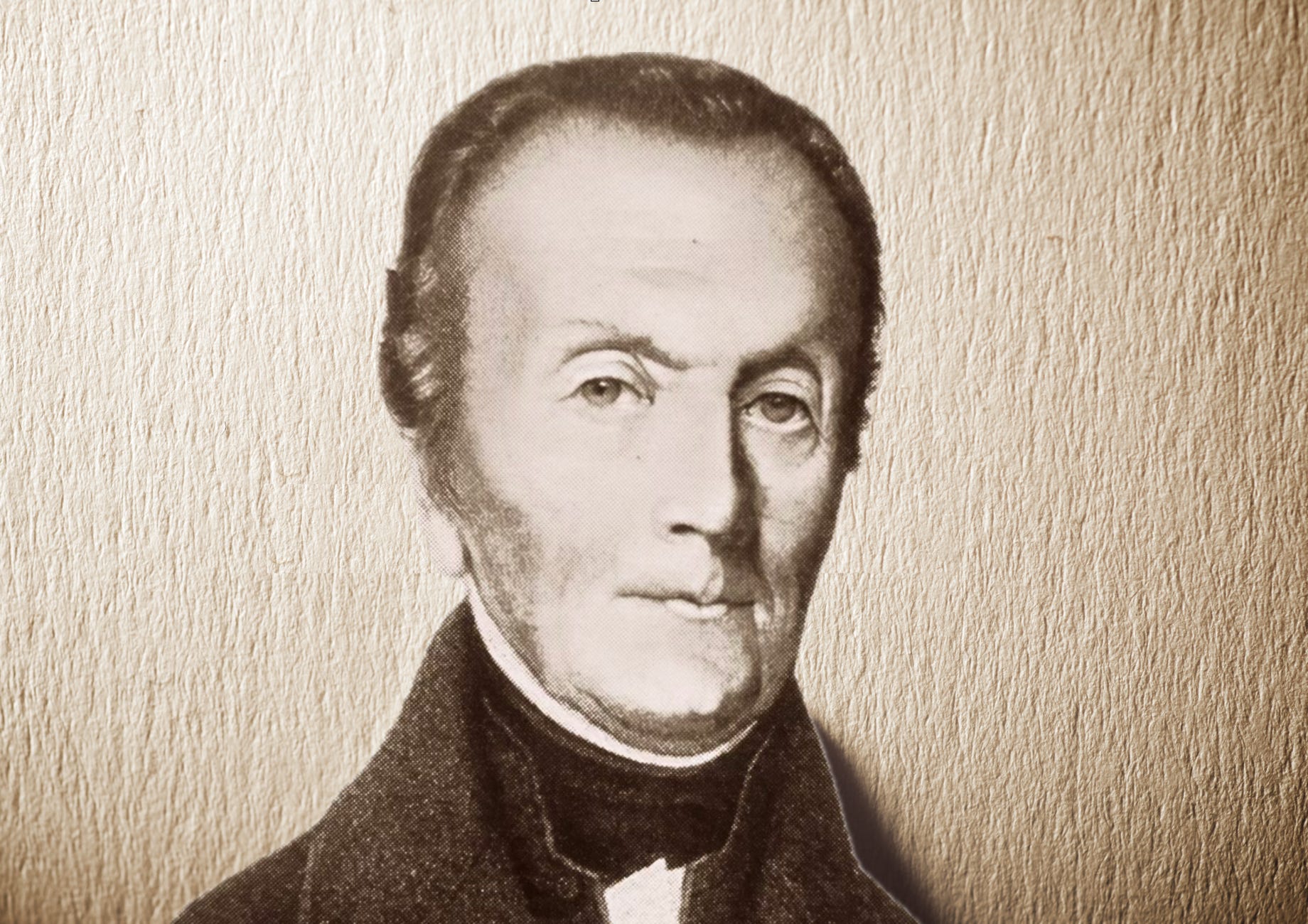
The brief selection below was adapted from Hug’s Introduction to the New Testament (Andover: Gould and Newman, 1836), pages 387-395. Hug first published this work in German in 1808, and the English translation is from the third German edition. This selection has been mildly edited and abridged for contemporary readability. Click here to read part 1 of this series which features a selection from Thomas Randolph, Vice-Chancellor of Oxford University.
The correct interpretation of Luke’s prologue would destroy or corroborate many hypotheses; but unfortunately, it is of such a nature that, though no doubt he to whom it was addressed understood it, we, on the contrary, to whom the circumstances of that period have become obscure, find great difficulty in extracting its meaning. This prologue is presented in two parts, one general (1:1-2), and the other particular (1:3-4).1
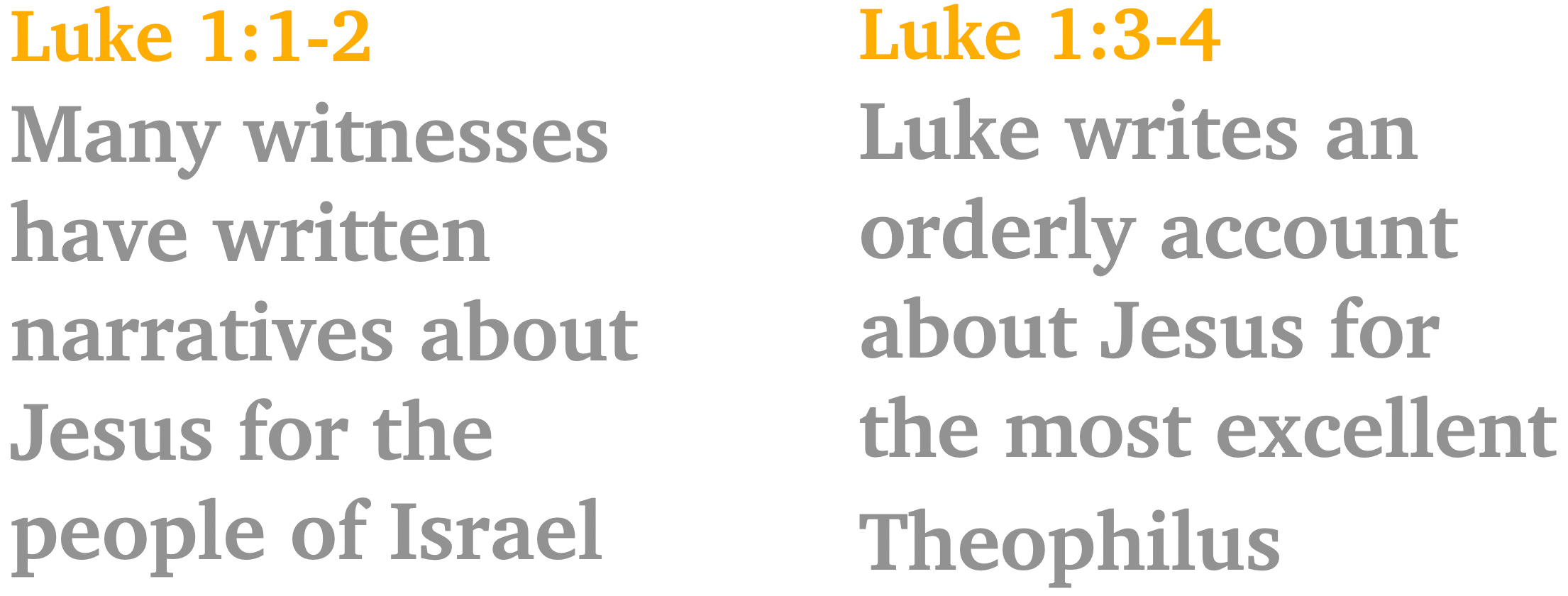
In my view, Luke’s chain of thought is this: “Inasmuch as many have undertaken to compose historical books, such as the apostles have put into our hands, I considered myself, too, as capable,” etc. The second part of the prologue begins with the words, ἔδοξεν κἀμοὶ (it seemed good to me), and presents an antithesis. As many have ventured to compose histories after the examples of eyewitnesses, I also thought myself authorised. The next few words, παρηκολουθηκότι ἄνωθεν πᾶσιν ἀκριβῶς, contain a further explanation and confirmation of the right he had to engage in his undertaking. I originally misunderstood these words, and first corrected my mistake on occasion of preparing my lectures upon Demosthenes’ oration Pro Corona.
The word παρακολουθεῖν includes the idea of presence. Used concerning events, it signifies to be present while they are passing, and, in its strictest sense, to be an eyewitness of what takes place. The expression παρακολουθεῖν τοῖς πράγμασι is common with the ancients, and signifies, to follow events with attention as they occur. But when used in speaking of events which are not confined to a single place, but occur in various places, and have whole countries for their theatre, it signifies that they are followed with attention from a certain point of view. Thus Demosthenes observed the events of his time with the eye of a statesman; Thucydides the occurrences of the Peloponnesian war as a soldier; and so did Josephus those of the Jewish war.
The acts of Jesus were of this latter kind; not confined to a single place, but scattered through Galilee and Judea (Acts 2:22, 10:37-39). Now when Luke asserts that he had been a follower from the beginning, he does not express himself as having been an eyewitness of all the events, but as having been in the region of their occurrence, where he could observe them as they took place.
According to this representation there had appeared works on the history of Jesus by the hand of eyewitnesses and ministers of the faith, and of these there were not merely one or two, but many. To say the least, it’s clear that Luke was acquainted with the works of his predecessors. The many who are referred to did not translate from any work already in existence, with the aid perhaps of versions of it which had been made at an earlier time; they composed their histories. This was their mode of procedure, and we must suppose it to have been that of eyewitnesses more especially, as they had less reason to rely on foreign aid.
It is very plain that Luke proceeded in the same way. He asserts his independence, appeals in support of it to his having been in the vicinity of the events while they were taking place, and pledges himself to present them in the order of their occurrence and to give an authentic account of what had happened. Luke’s special purpose was to supply Theophilus with a true exhibition of facts where previously he had only unauthenticated statements.2
As to his relation to the Christian sect at its rise, a tradition has been preserved that he was one of the seventy disciples. This account is confirmed by the fact that he alone of all the Evangelists has mentioned the seventy, and has carefully given the history of their mission and return and the instructions connected with them (Lk 10:1-25), as though he felt himself called upon to do so by particular personal concern in them. Moreover, he exhibits a minute acquaintance with these occurrences, such as could be expected only from an eyewitness.
Luke wrote his Gospel primarily for Theophilus, to whom he gives the title κράτιστος (most excellent) which in the ancient inscriptions is conferred upon high priests and priestesses,3 those who had the superintendence of sacred edifices and games, deputies of the emperor in the provinces, overseers of the emperor’s revenues, etc. Were we better informed in regard to this person to whom Luke has dedicated his writings, considerable light might be thrown on the history of this Gospel.
Click here to read Part 3 of this series
FOR FURTHER STUDY
Rethinking Luke’s Prologue, Part 1, Thomas Randolph
Things Completely Fulfilled Among Us, Shane Rosenthal
Luke’s Key Witness: A Postitive Review, Clyde Billington
His Excellency, The High Priest, Shane Rosenthal
The Implications of 70 AD on the Date of the Gospels & Acts, Shane Rosenthal
A Pre-70 Date for the Gospels & Acts, Shane Rosenthal
Outside the Gospels, What Can We Really Know About Jesus?, Shane Rosenthal
Is Luke a Trustworthy Historian?, Sir William Ramsay
Can We Trust Luke’s History of the Early Jesus Movement? Shane Rosenthal
On Faith & History, Shane Rosenthal
VIDEO
Rethinking Luke’s Prologue: A Webinar by Shane Rosenthal for Paid Subscribers
Editor’s note: the chart below is my own summary of Hug’s material, and is not a feature of Hug’s original work.
Editor’s note: according to many translations, Lk 1:4 refers to things Theophilus had been “taught” (κατηχέω), however Luke uses this same word in Acts 21:21-24 to refer to things that some of the Jews “had been told” about Paul, some of which wasn’t true. In other words, Lk 1:4 does not necessarily refer to formal instruction.
I discuss this evidence in the following article: “His Excellency, The High Priest.” I’m fascinated by the fact that Hug was aware of the evidence that showed the word κράτιστος was applied to high priests. The overwhelming majority of commentators on Luke/Acts don’t seem to be aware of this fact.