
Rethinking Luke's Prologue, Part 3
Selections from Daniel Whitby (1638–1726) and George Gleig (1753–1840).

Some years ago, Richard Bauckham told me that the world of New Testament scholarship is not necessarily a progressive science, since it sometimes happens that important mistakes are made which end up taking the field down the wrong path for the better part of a century, or even longer. When this occurs, I often say that the best way forward is actually to go back and to reflect on things written in earlier periods (i.e., before some of the key mistakes were made, etc.). Along those lines, here are two additional writers from previous centuries who advocated intriguing ideas about Luke that are worth reconsidering. The first selection from Daniel Whitby is taken from A Paraphrase And Commentary on the New Testament, Vol. 1, first published in 1700,1 and the second is from George Gleig, adapted from his appendix to The History of the Holy Bible, Vol. 3, published in 1817.2 Both selections have been abridged and edited for contemporary readability.
Click here for Part 1, featuring selections from Thomas Randolph
Click here for Part 2, featuring selections from Johann L. Hug
Click here to get a pre-release PDF of Shane’s book, Luke’s Key Witness
Click here to watch Shane’s Webinar: “Rethinking Luke’s Prologue” (available exclusively for Paid subscribers).
Selections from the writings of Daniel Whitby:
Some writers suggest that Luke confesses he was not from the beginning an eyewitness and minister of the word (Lk 1:1-2), and therefore is thought to have his Gospel from the information of Paul and other Apostles. However, the words of the Evangelist are so far from giving any ground to this assertion, that they plead fairly for Luke’s personal knowledge of all the things written in the Gospel, even from first to last (cf. Lk 1:1-3). The words of the prologue do not give us the least hint that Luke recieved his information about Jesus from the “eyewitnesses and servants of the word” (Lk 1:2). Instead, it seems clear that Luke places himself in their rank. Hence I conclude that though Luke was not an apostle, he might be one of the seventy mentioned in Luke 10, as Origen and Epiphanius say he was.
It is certain that Jesus had not only twelve apostles, but seventy (or seventy-two) disciples who followed him. For after he sent the twelve to preach the kingdom of God (Lk 9:1-2), he later sent out seventy others to go in pairs before him, and to preach in every city he was about to visit (Lk 10:1-9). We should note that they were sent on the same mission, since they were both sent by Jesus to preach in his name, with the same power, to heal diseases, and to cast out demons (compare Lk 9:1-10 with Lk 10:1-17).
As he said to the apostles, “I send you out as sheep among wolves,” (Mt 10:16), so also he said to the seventy (Lk 10:3). As he said to the twelve, “He that recieves you receives me,” (Mt 10:40), so he said to the seventy, “He that hears you hears me,” (Lk 10:16). When the apostles were told to stay in Jerusalem until they recieved “power from on high” (Lk 24:49-50, Acts 1:4-8), so may we reasonably conclude that the seventy were also endued with this same power on the day of Pentecost since they were very likely among the one hundred and twenty disciples mentioned in Acts 1:15.
On the day of Pentecost, all those who had assembled together with the apostles were filled with the Holy Spirit. It is therefore highly reasonable to suggest that the seventy were included in this number, not merely from church tradition but by the nature of the thing itself. For Peter says that an apostle must be chosen out of those that had been with them all the time that the Lord Jesus went in and out among them (Acts 1:21-22), and where might they have found such qualified men but from among the seventy?
In Acts 13:31, Paul speaks of men coming up with Jesus after his resurrection from Galilee who were witnesses to the people, and surely the seventy must be included in this number. Moreover, shouldn’t we expect the seventy to have travelled to Jerusalem after Jesus’ resurrection? Can we imagine men so full of hope that Jesus would now restore the kingdom to Israel (Acts 1:6) staying behind in Galilee? And if they had come to Jerusalem, shouldn’t we also expect them to continue in the company of the apostles? Can we think that one hundred and twenty others should stay with them, but that the seventy should be mysteriously absent, especially at the Feast of Pentecost when they had so much reason to expect the promise of the Father?
Additionally, it is certain from Luke that Christ made the seventy “laborers in his harvest” (Lk 10:1-2), and therefore ministers of his gospel who were called to declare that “he who heard them, heard him,” and “he that despised them, despised him” (Lk 10:16). He also commissioned them to work miracles and cast out demons in his name (Lk 10:9, 17). Now if the seventy disciples had a commission to preach to other nations once Jesus was seated at the right hand of his Father (cf. Acts 1:8), just as Epiphanius expressly says, that the seventy-two were sent to be “preachers throughout all the world,” then they too must have recieved the promise of the Father (Lk 24:49).
Thus, Eusebius reckons the twelve apostles, Paul, and the seventy disciples among those who were enabled to write a thousand mysteries, and Origen says well that it is more reasonable to think that Christ should commit the writing of his gospel to his disciples, rather than to those who never followed him.
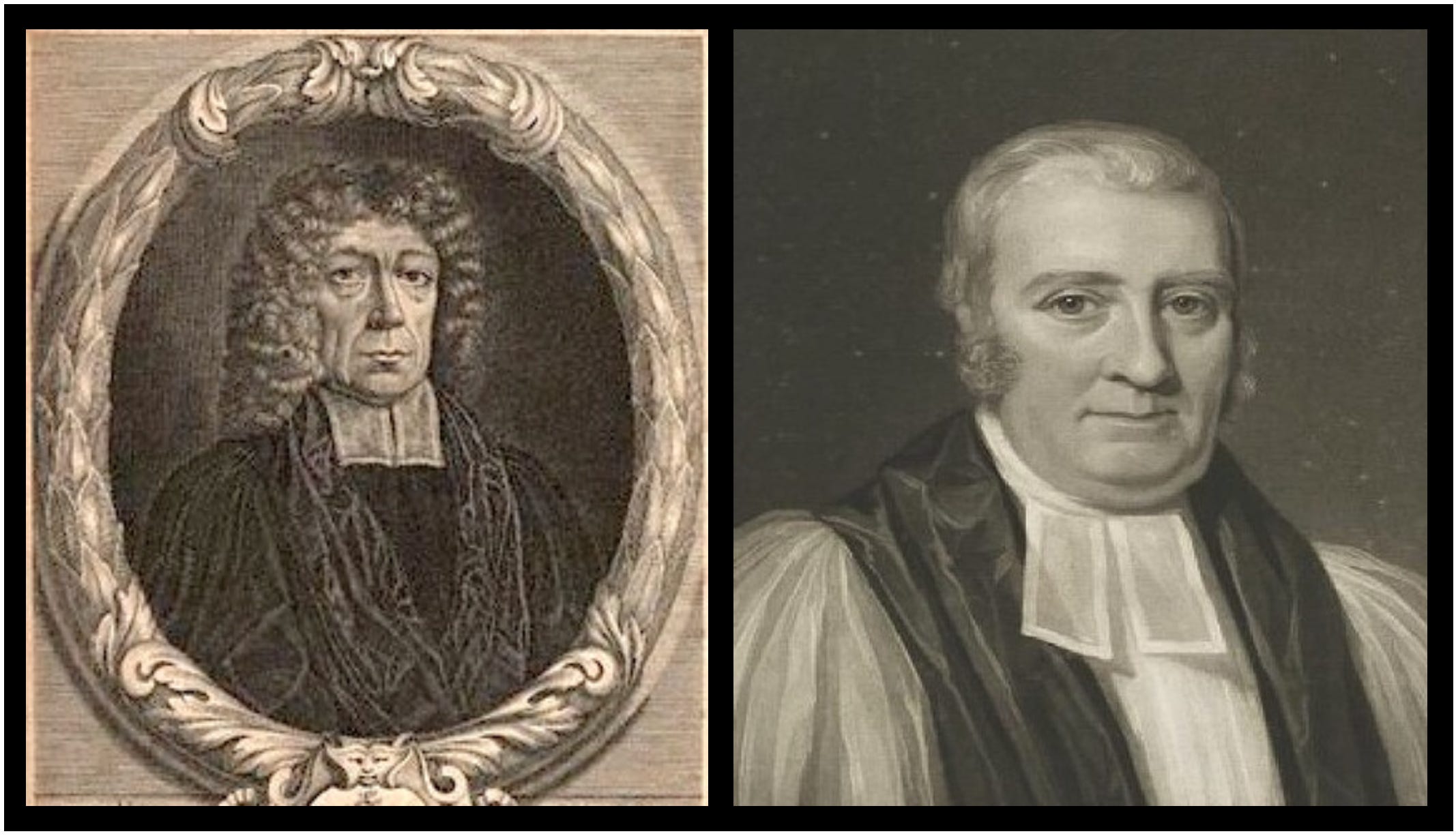
Selections from the writings of George Gleig:
The opinion that Luke was not a disciple of Christ appears to have been drawn by inference from his own words in his address to Theophilus. “The apostles,” says Irenaeus, “delivered plainly to all the things which they had learned from the Lord. So likewise Luke has delivered to us what he learned from them, as he says: ‘Even as they delivered them unto us, who from the beginning were eyewitnesses, and ministers of the word.’”
It is evident from this passage, if the Latin translation can be depended on, that Irenaeus derived his opinion, not from Polycarp or Papias, or from any general tradition of the church, but from the words of Luke himself, which it is certainly possible that even he may have misunderstood. These words have indeed been taken in the same sense by many eminent scholars among the moderns; but however presumptuous I may be thought, I cannot help, in opposition even to such great authorities, agreeing with Dr. Whitby, that the words of the evangelist, far from affording ground for the inference which has been drawn from them, plead powerfully for Luke’s personal knowledge, or such knowledge as the apostles themselves possessed, of all the things which he has recorded in his Gospel.
The words of Lk 1:2, καθὼς παρέδοσαν ἡμῖν οἱαπἀρχῆςαὐτόπται (“just as has been delivered to us”), relate not to Luke’s knowledge, but to the source of the information of those who had set forth the orderly narratives he just mentioned; and he is so far from saying that he had derived his knowledge through the same channel with them, that, though he was undoubtedly a constant attendant on the apostles preaching, his whole address implies, what the word παρηκολουθηκότι must therefore mean, that he had been an eye and ear witness of all which he was about to relate; for if this is not his meaning, how could Theophilus derive more certain knowledge from Luke’s narrative than from those which were already in circulation, and on which no censure had been passed.
The verb παρακολουθέω, being derived from ἀκολουθος (an attendant, companion, or observer), can be properly employed only by someone who has constantly been present as a companion, or has observed some person or thing as an eye or ear witness; for it is employed to denote the observation or attendance of things, as well as of persons. Thus, the historian Josephus asserting his own credit says, “Everyone, who undertakes to deliver the history of actions truly, ought to know them accurately himself in the first place, as either having been present with them / concerned in them (παρηκολουθηκότα), when they happened, or were informed of them by those who knew them.
Paul used this same word when he wrote to Timothy, saying, “You have followed my doctrine, conduct, purpose, faith, patience, love, steadfastness,” etc., (2Tim 3:10), but how did Timothy come to know these things? Was it by the declaration of others, or by spending time with Paul himself throughout the course of his ministry? This question admits of but one answer. Timothy was the apostle’s constant companion. He heard his doctrine with his own ears, and witnessed his manner of life with his own eyes, and thus acquired his knowledge.
When it comes to the things recorded in his Gospel, Luke assures us that he had the same kind of knowledge that Timothy had of the life and teaching of Paul, and that Josephus had of the origin and progress of the Jewish war; but the knowledge of Timothy in the one case, and of Josephus in the other, was unquestionably personal—what each had seen and heard; and therefore, Luke’s knowledge of all that Jesus did and taught must also have been personal. He had seen Jesus with his own eyes, and heard him with his own ears. Luke therefore must have been a disciple of Christ himself, and an observer of all his words and actions. If this is the case, it is extremely probable that he was one of the seventy.
Luke is the only evangelist who gives an account of the appointment of the seventy (though Matthew evidently alludes to it), and he dwells longer on their appointment and commission than he does on the call of the twelve apostles and the commission given to them. This would be extremely natural if he was one of the seventy, but almost unaccountable if he was not. The apostles were, as ministers of the word, superior to the seventy; their commission was permanent, which the commission of the seventy seems not to have been; and they were admitted to a closer intimacy with their divine master. Had Luke derived all his knowledge of Jesus’ preaching and miracles from the report of others, he would surely have given a more detailed account of the success of the higher order of ministers than of the lower; but if he was one of the seventy himself, it would be extremely natural to expound most fully on events in which he played a significant role.
With regard to Luke’s background, there is in the New Testament very sufficient evidence that, wherever he may have been born, he was a Jew before he became a Christian. It is worthy of observation that in all his dates, Luke follows the Jewish computations of time, which we can hardly suppose that he would have done had he been himself a Gentile Christian, writing for the instruction of Gentile converts. But Luke was an early disciple of Christ; if he was one of the seventy, there is no room for doubt but that he was also one of the hundred and twenty disciples who gathered in one place when divided tongues as of fire appeared above each one of them, and they were filled with the Holy Spirit (Acts 2:3-4). Therefore, though Luke was inferior to the apostles, with regard to inspiration, he was “not a whit behind the very chiefest of them.”
Click here to read Part 4 of this series
FOR FURTHER STUDY
Rethinking Luke’s Prologue, Part 1, Thomas Randolph
Rethinking Luke’s Prologue, Part 2, Johann L. Hug
Luke’s Key Witness: A Postitive Review, Clyde Billington
Things Completely Fulfilled Among Us, Shane Rosenthal
His Excellency, The High Priest, Shane Rosenthal
The Implications of 70 AD on the Date of the Gospels & Acts, Shane Rosenthal
A Pre-70 Date for the Gospels & Acts, Shane Rosenthal
Outside the Gospels, What Can We Really Know About Jesus?, Shane Rosenthal
Is Luke a Trustworthy Historian?, Sir William Ramsay
Can We Trust Luke’s History of the Early Jesus Movement? Shane Rosenthal
On Faith & History, Shane Rosenthal
AUDIO
Who is Theophilus? Humble Skeptic #79 with Peter. Bolt
Luke, Theophilus & Joanna, Humble Skeptic #80 with Jim Sibley
A Forensic Approach to the Gospels, Humble Skeptic #81 with J. Warner Wallace
Why The Gospel Holds Up as History, Faith Lab with Craig Keener
VIDEO
Rethinking Luke’s Prologue: A Webinar by Shane Rosenthal for Paid Subscribers
The edition used here was published in London by W. Bower (1703), and the material adapted was taken from pages 315-323.
This book was printed in London by Longman, Hurst, Rees, et al (1817), and the selections extracted were taken from pages 89-93.
I really think that you piecing all of this together with the ossuary artifact is going to become one of the most prolific pairing of evidences to date. If you are correct, then there is strong arguable evidence about the historicity of gospel details occurring decades earlier than scholarly consensus concludes. Atheists use the post-70 ADs as examples of how people couldn’t confirm details because of the Roman dispersion of Jews after the temple was destroyed. This work essentially destroys that argument among many others that critics use.