
Rethinking Luke's Prologue, Part 4
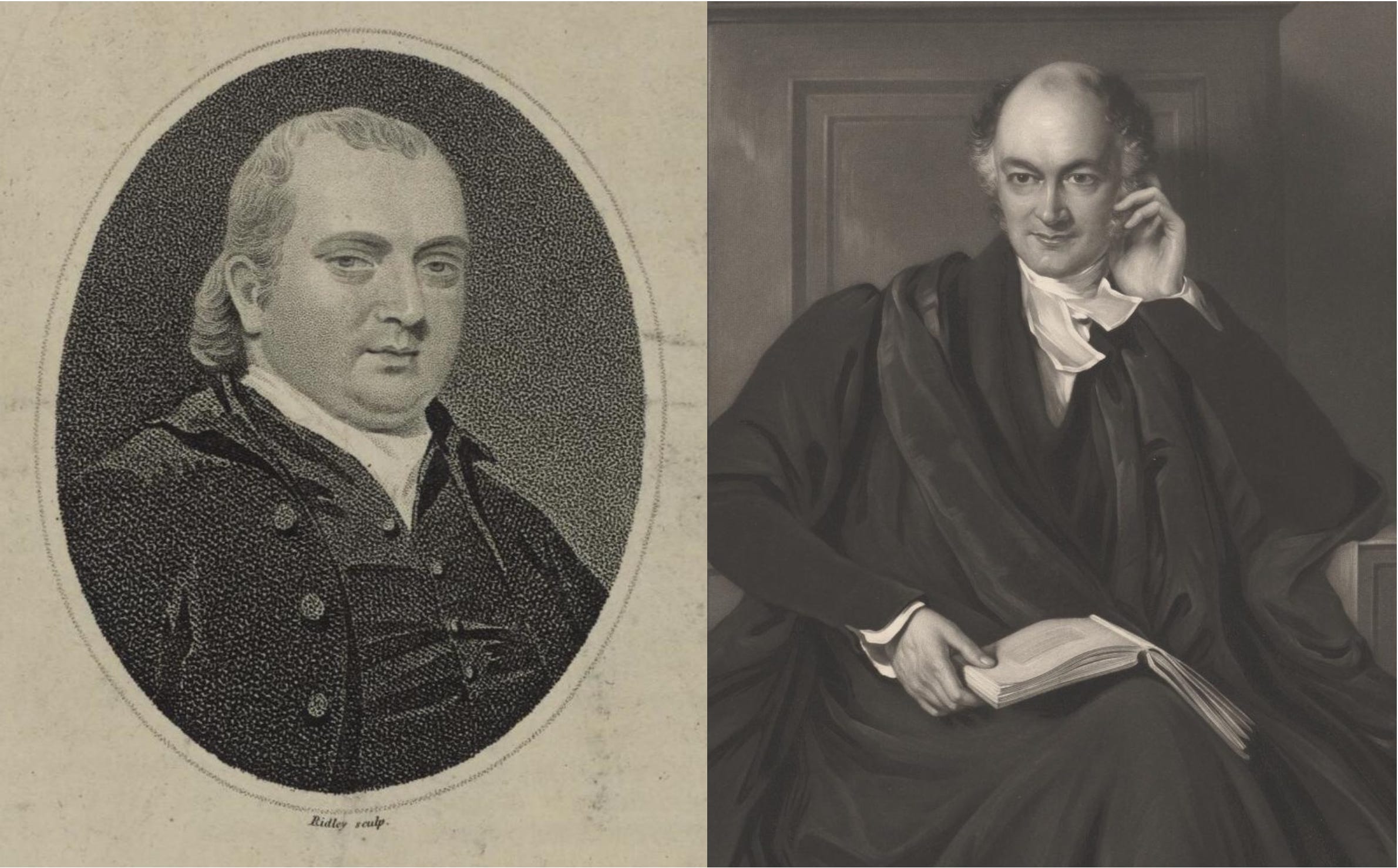
Selections from John Jones (1766-1827) and George Moberly (1803-1885).


The first selection below was adapted from an 1825 essay by John Jones titled “In Proof of St. Luke Being a Companion of our Lord,” published in The Monthly Repository.1 The second piece is by George Moberly and was adapted from his book, The Administration of the Holy Spirit in the Body of Christ, which was first delivered as a series of lectures at Oxford University in 1868.2 Both selections have been abridged and edited for contemporary readability.
Use these links to access Part 1, Part 2, or Part 3 of this series. Click here to get a pre-release PDF of Shane’s book Luke’s Key Witness, and here to watch the webinar, “Rethinking Luke’s Prologue,” which is exclusively for paid subscribers.
Selections from the writings of John Jones:
That Luke was not an eyewitness of the transactions which he has recorded, is an assertion first made by Irenaeus in the second century and received from him by modern critics, though directly contradicted by Luke himself. This is a matter of high importance, and cannot be too often brought forward to illustrate the folly of implicitly trusting learned men who adopt, without due examination, the opinions handed down to them by their forefathers.
In the opening verse of his Gospel, Luke says that the transactions of Jesus had been accomplished “among us,” meaning the people of Judea, in the midst of whom Jesus fulfilled his ministry, and of whom Luke makes himself one. The word αὐτόπται (eyewitnesses) refers to the apostles who gave faithful narratives of Jesus to their countrymen when preaching the gospel.
When Luke asserts that the things which he relates respecting Christ were accomplished among us, he intimates, and that not obscurely, that he himself was one of those who had witnessed them; and this he positively asserts in the following clause, for the verb παρακολουθέω (Lk 1:3) means to attend at the side, closely to follow, to inspect and examine what is carried on; and it implies that he was in the number of those who accompanied Jesus during his performance of the things related of him. It is worth noting that Luke does not use the present or future participle, as if the author meant that he was about to follow the train of events in his mind when proceeding to write. He instead uses the past participle, thus intimating that he had already accompanied the particulars which he was going to record; and his reason for this determination was the fact that he was present at the time of their accomplishment.
Thus Luke sets forth his competence as an historian with unexampled force and precision. He had from the very beginning attended the events and speeches he records, and had heard the same facts related to the Jewish people by other persons, who, like himself, had been eyewitnesses, and men who were officially chosen to attend the ministry of Jesus. This appeal to the testimony of the apostles and the whole body of Jewish believers ends up corroborating his own testimony, and if we make the appeal to his Gospel, we shall find in it many proofs that he wrote not what had been related to him by others, but what he had himself seen and heard from the lips of Christ.
Paul, in preaching the gospel, must have had frequent occasion to refer to the sayings and miracles of Jesus; and it was of high importance to be accompanied in his travels by one who had attended his ministry, and could furnish the necessary information on the best possible authority—his own personal knowledge. This seems to have been the reason which led him to select Luke as the companion of his labors.
Now, what we might thus expect or infer, is fully verified by the following passage of Paul: “With him we have sent the brother whose praise by means of his Gospel, is known throughout all the churches” (2 Cor. 8:18). This brother means Luke, whom, in the next verse, he calls his fellow-traveller, and if in all the churches he was praised on account of his Gospel, he must have left a copy of that Gospel (though yet probably not published to the world at large) with each congregation. This, in return, endeared him to the several Christian societies which he had helped in forming. They regarded the work given them as a treasure of high value, and they unanimously praised the author; thus indirectly bearing their testimony to his accuracy, fidelity, and truth as the historian of Jesus Christ. This is a most important fact, and it is surprising that it should have been overlooked by learned men.
We learn from this passage that the Gospel of Luke was extant and that it was deposited in all the churches within twenty years after the crucifixion of Jesus. These believers knew the author personally, and they had the utmost confidence in him for his integrity and love of truth. This testimony of the apostle Paul, which, from the incidental manner in which it is told, lies beyond all reasonable suspicion and dissipates into air the falsehood repeated by unbelievers that the gospels were unknown to the world until a century or two later when they were selected from a mass of other spurious gospels, and by the decrees of certain councils were imposed upon on the believing public as if they were genuine productions.
Selections from the writings of George Moberly:
It has been commonly assumed by many interpreters that in his preface, Luke attributes the authority of his narrative to ‘eyewitnesses and ministers of the word’ in such a manner as to disclaim, and exclude altogether, the idea of his having been an eyewitness himself of the events which he records. Though this interpretation is widespread, I am disposed, however, to doubt it, since it seems to me to rest upon a superficial view of Luke’s words.
Instead of excluding himself from the class of eyewitnesses, Luke rather puts himself (not directly, but by implication) among them. He seems to be saying, “Eyewitnesses have taught the Church, so I will teach you.” Thus, it seems to me that, according to the logic of the passage, Luke regards Theophilus as one of us (Lk 1:1; ἡμῖν), and that he puts himself into the category of those who can provide accurate and trustworthy information, that is, he too was an eyewitness.
Leaving then the logic of the passage, let us now look more closely into the words in which Luke assigns the ground of his own authority. What is the meaning of the key verb in Lk 1:3, παρηκολουθηκότι? According to Liddell & Scott’s Lexicon, it means to go beside or follow closely. Used metaphorically, it can also mean to follow with one’s thoughts. In Demosthenes De Corona, however, it seems to me to have more precisely the meaning of having personally accompanied the events than of having followed them in thought and understood them.3
The more important question is this: What is the meaning of the verb in the later period, closer to the time of the New Testament? In answer to this question, I’ll quote a passage from the fragments of Papias: “If by chance someone who had been a follower of the elders (παρηκολουθηκώς) should come my way, I inquired (ἀνέκρινον) about the words of the elders” (Eusebius, H.E., 3.39.4).
And there is a passage of Josephus which is equally clear and strong to my present purpose: “Everyone who undertakes to deliver the history of actions truly, ought to know them accurately himself in the first place, as either having been concerned in them himself, (παρηκολουθηκότα) or been informed (πυνθανόμενον) of them by such as knew them.” (Apion 1:53).
Here we have the two sources of knowledge expressly distinguished from one another, personal witness, and derived information; and any person who reads the whole passage will see how definitely Josephus means to declare his own personal witness of the events he relates.
When to all this we add the fact that there is an ancient tradition that Luke was one of the seventy, or, at least, a personal disciple of the Lord, I confess that it appears to me to be a somewhat hasty reading of the preface which leads interpreters to conclude, with almost one voice, that Luke expressly disclaims the authority of having seen with his own eyes any of the events which he records.
Click here to read Part 5 of this series
FOR FURTHER STUDY
Rethinking Luke’s Prologue, Part 1, Thomas Randolph
Rethinking Luke’s Prologue, Part 2, Johann L. Hug
Rethinking Luke’s Prologue, Part 3, Daniel Whitby and George Gleig
Luke’s Key Witness: A Positive Review, Clyde Billington
Things Completely Fulfilled Among Us, Shane Rosenthal
His Excellency, The High Priest, Shane Rosenthal
The Implications of 70 AD on the Date of the Gospels & Acts, Shane Rosenthal
A Pre-70 Date for the Gospels & Acts, Shane Rosenthal
Outside the Gospels, What Can We Really Know About Jesus?, Shane Rosenthal
Is Luke a Trustworthy Historian?, Sir William Ramsay
Can We Trust Luke’s History of the Early Jesus Movement? Shane Rosenthal
On Faith & History, Shane Rosenthal
AUDIO
Who is Theophilus? Humble Skeptic #79 with Peter. Bolt
Luke, Theophilus & Joanna, Humble Skeptic #80 with Jim Sibley
A Forensic Approach to the Gospels, Humble Skeptic #81 with J. Warner Wallace
Why The Gospel Holds Up as History, Faith Lab with Craig Keener
VIDEO
Rethinking Luke’s Prologue: A Webinar by Shane Rosenthal for Paid Subscribers
J. Jones “In Proof of St. Luke being a Companion of our Lord,” The Monthly Repository, (No. 238, Oct. 1825, Vol. 20), 586-587. Other pages of this publication make clear that the author’s name was “John.”
George Moberly, The Administration of the Holy Spirit in the Body of Christ (Oxford: James Parker & Co., 1870), 278-283. This material was first presented in a series of lectures at Oxford in 1868.
Moberly then cites the relevant passage in Greek: Αλλ’ ὡς ἔοικεν, ἐκεῖνος ὁ καιρὸς, καὶ ἡ ἡμέρα ἐκείνη οὐ μόνον εὔνουν καὶ πλούσιον ἄνδρα ἐκάλει, ἀλλὰ καὶ παρηκολουθηκότα τοῖς πράγμασιν ἐξ ἀρχῆς,καὶ συλλελογισμένον ὀρθῶς τίνος ἕνεκα ταῦτ ̓ ἔπραττεν ὁ Φίλιππος, καὶ τί βουλόμενος.